

I’ve discovered that the right words can literally rewire my brain and accelerate my healing journey. Power Words for Personal Healing combines neuroscience with practical language techniques to help anyone struggling with addiction, trauma, or emotional wounds transform their inner dialogue and rebuild their life.
This guide is for you if you’re in recovery, working through past trauma, or simply want to harness the proven power of positive self-talk to heal faster and more completely. I’ve designed it for people who are ready to move beyond surface-level affirmations and dive into evidence-based approaches that create lasting change.
I’ll walk you through the fascinating science behind why certain words trigger healing responses in your brain and body. You’ll learn how to build your own collection of drug recovery affirmations that actually work, not just feel-good phrases that fade away. I’ll also share practical techniques for developing an addiction healing mindset through strategic word choices and show you how to overcome the mental resistance that often sabotages positive recovery quotes and self-healing efforts.
By the end, you’ll have a personalized toolkit of power words and proven methods to accelerate your healing process, whether you’re days or years into your recovery journey.
Table of Contents
- Understanding the Science Behind Healing Words
- Essential Categories of Power Words for Self-Healing
- Creating Your Personal Healing Vocabulary
- Techniques for Maximizing Word Power Impact
- Overcoming Resistance to Positive Self-Talk
- Advanced Practices for Deepening Word-Based Healing
- Conclusion
- Frequently Asked Questions (FAQ)
- How long does it take to see results from healing words?
- Can healing words replace professional therapy or medical treatment?
- What if I don’t believe the words I’m saying?
- How do I choose the right words for my specific situation?
- Should I say these words out loud or silently?
- How many times should I repeat each phrase?
- What if negative thoughts keep interrupting my practice?
Understanding the Science Behind Healing Words

How language affects your brain chemistry and neural pathways
When I speak healing words to myself, I’m literally rewiring my brain at the neurological level. My brain doesn’t distinguish between what I’m saying out loud and what’s actually happening – it responds to my words as if they’re real events unfolding in my life.
Every time I use positive language, my brain releases neurotransmitters like dopamine and serotonin. These feel-good chemicals flood my neural pathways, creating new connections that make positive thinking easier over time. My prefrontal cortex – the area responsible for executive function and emotional regulation – becomes more active when I consistently use uplifting words.
What fascinates me most is how my brain’s neuroplasticity allows these language patterns to create lasting change. When I repeat healing phrases, I’m strengthening specific neural networks while weakening the pathways associated with negative self-talk. It’s like creating superhighways for positive thoughts while letting the old negative roads fall into disrepair.
My amygdala, which processes fear and stress, actually becomes less reactive when I regularly practice positive self-talk. This means my fight-or-flight response doesn’t get triggered as easily, and I experience more emotional stability throughout my day.
The connection between spoken affirmations and cellular regeneration
My spoken words create vibrations that extend far beyond what I can hear. These sound waves carry specific frequencies that my cells can actually detect and respond to. When I speak with intention and positivity, I’m sending healing signals throughout my entire body.
Research shows that my cells have the ability to respond to the emotional content of my words. When I use drug recovery affirmations or practice positive recovery quotes, my cells receive these messages and begin shifting their behavior accordingly. My immune system becomes more robust, my cellular repair mechanisms work more efficiently, and even my DNA expression can change in response to consistent positive self-talk.
The vagus nerve, which connects my brain to most of my vital organs, acts as a communication highway for these healing messages. When I speak affirmations, the vibrations travel through this neural network, influencing everything from my heart rate to my digestive function.
My stem cells – the body’s natural repair crew – become more active when I maintain an addiction healing mindset through consistent positive language. They respond to the biochemical changes that occur when I speak healing words, accelerating my body’s natural ability to heal and regenerate.
Research on positive self-talk and stress hormone reduction
Studies have shown that when I engage in positive self-talk, my cortisol levels drop significantly within minutes. This stress hormone, when chronically elevated, wreaks havoc on my immune system, digestive health, and mental clarity. By consciously choosing healing words, I’m giving my body permission to exit survival mode and enter a state of repair and regeneration.
My blood pressure decreases when I practice positive affirmations regularly. The physiological changes are measurable and consistent – my body literally responds to kind, supportive language by relaxing and opening up to healing possibilities.
What’s remarkable is how quickly these changes occur. Within just 20 minutes of positive self-talk, my stress hormones begin to normalize, and my parasympathetic nervous system – responsible for rest and repair – becomes more dominant. This shift creates the optimal internal environment for healing to take place.
My sleep quality improves dramatically when I end each day with healing words. Lower stress hormones mean my body can enter deeper stages of restorative sleep, where the most significant cellular repair happens.
Why certain words trigger emotional and physical healing responses
Specific words carry what I call “energetic signatures” that my body recognizes at a cellular level. Words like “peace,” “healing,” “love,” and “wholeness” trigger different physiological responses than words like “struggle,” “pain,” or “broken.” My nervous system has learned to associate certain sounds and meanings with either safety or danger.
When I use recovery-focused language, I’m activating neural pathways connected to hope, possibility, and forward momentum. These pathways stimulate the release of endorphins and other healing hormones that support both emotional and physical recovery.
My mirror neurons play a crucial role in this process. These specialized brain cells fire both when I perform an action and when I hear words describing that action. When I speak about healing, my mirror neurons activate as if I’m actually experiencing the healing I’m describing.
The emotional charge behind my words amplifies their healing power. When I speak with genuine feeling and belief, the impact on my physiology increases exponentially. This is why cultivating an addiction healing mindset through authentic, heartfelt affirmations creates more profound changes than simply reciting words without emotional connection.
Essential Categories of Power Words for Self-Healing
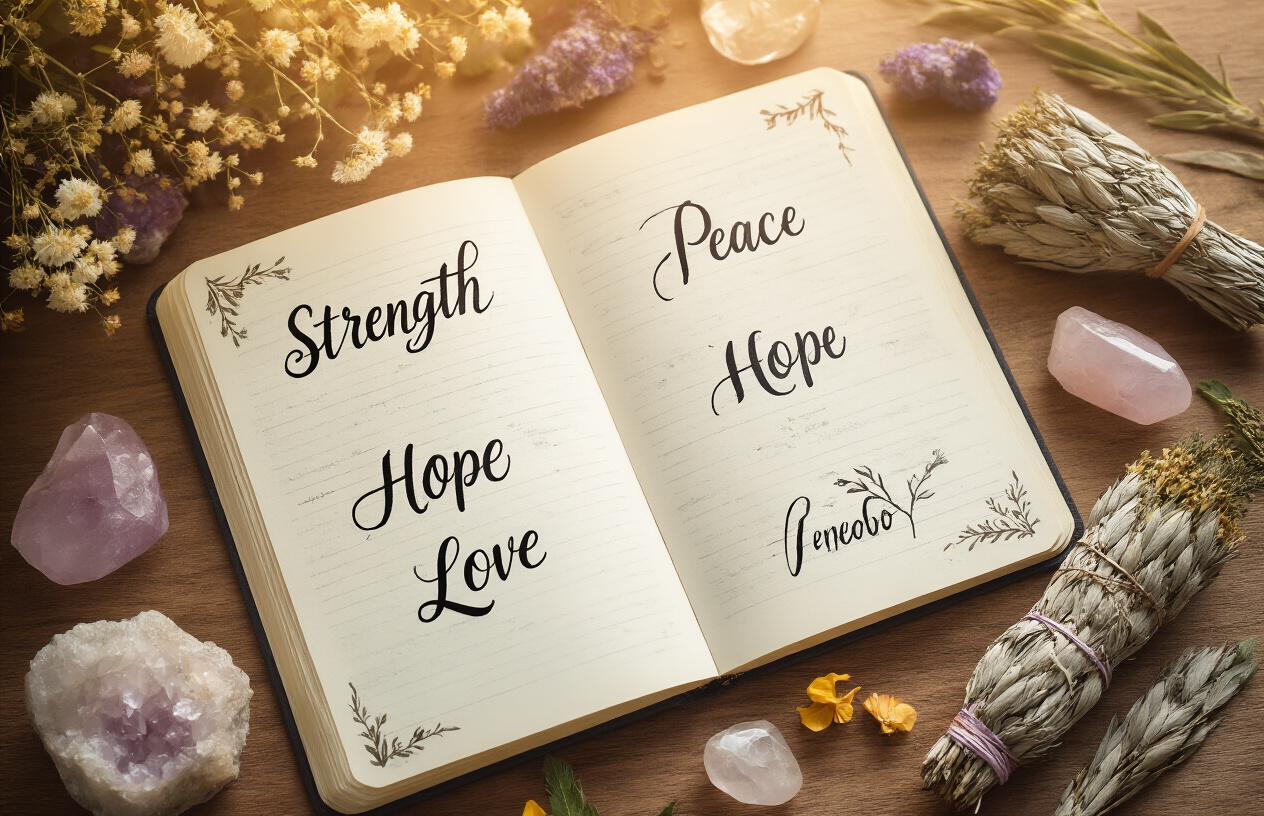
Forgiveness Words That Release Emotional Blockages
When I practice forgiveness, I use specific words that help me let go of resentment and pain. “I release what no longer serves me” has become my go-to phrase when I feel stuck in old hurts. These words create space in my heart for healing energy to flow freely.
My favorite forgiveness affirmations include “I choose peace over being right” and “I forgive myself for not knowing better then.” For those working through drug recovery affirmations, phrases like “I forgive my past choices and embrace my healing journey” create powerful shifts in mindset. When addiction healing mindset becomes my focus, I repeat “I release shame and welcome compassion.”
I’ve discovered that starting with self-forgiveness makes everything else easier. Words like “I am worthy of grace” and “My mistakes don’t define my worth” help me build a foundation of acceptance. From there, forgiving others becomes possible because I’m not carrying my own guilt anymore.
Gratitude Expressions That Shift Your Energy Frequency
My energy changes instantly when I speak gratitude into existence. Simple phrases like “I appreciate this moment” or “I’m grateful for my body’s strength today” create immediate shifts in how I feel. I notice my shoulders relax and my breathing deepens whenever I voice appreciation.
Starting my day with “I’m thankful for this fresh beginning” sets a completely different tone than waking up focused on problems. In recovery, positive recovery quotes about gratitude become lifelines. “I’m grateful for each day of healing” reminds me that progress happens one moment at a time.
I keep gratitude phrases specific and personal. Instead of generic thankfulness, I say things like “I appreciate my courage to face difficult emotions today” or “I’m grateful for the friend who listened without judgment.” These detailed acknowledgments make gratitude feel real and meaningful rather than just empty words.
Self-Compassion Phrases That Nurture Inner Healing
Talking to myself with kindness was something I had to learn deliberately. Now I use phrases like “I’m doing the best I can with what I have right now” when I feel frustrated with my progress. These words create a safe internal environment where healing can actually happen.
My self-compassion vocabulary includes “I treat myself with the same kindness I’d show a good friend” and “It’s okay to struggle sometimes.” When working through addiction healing mindset challenges, I remind myself “I’m learning to love myself through this process.” Recovery isn’t linear, and my words need to reflect that reality.
I’ve found that phrases starting with “It’s human to…” help normalize difficult experiences. “It’s human to make mistakes” or “It’s human to feel overwhelmed sometimes” remind me that I don’t have to be perfect to be worthy of love and healing.
Strength Affirmations That Build Resilience and Confidence
My strength affirmations focus on what I can do rather than what I can’t. “I have survived difficult times before, and I can do it again” reminds me of my proven resilience. When I say “I am stronger than my challenges,” I feel my inner power activate.
Building confidence through words requires consistency. I use phrases like “I trust my ability to handle whatever comes” and “I grow stronger with each challenge I face.” For addiction recovery, drug recovery affirmations such as “I choose sobriety because I am worth it” create powerful internal shifts that support lasting change.
I personalize strength affirmations based on my specific struggles. If anxiety is challenging me, I say “I have the courage to feel afraid and act anyway.” If temptation arises, “I am committed to my healing journey” becomes my anchor. These targeted affirmations give me exactly the kind of strength I need in each moment.
Creating Your Personal Healing Vocabulary

Identifying Words That Resonate With Your Specific Trauma or Pain
When I began my own healing journey, I discovered that not every positive word worked for me. Some felt hollow, others actually triggered resistance. The key was finding words that genuinely connected with my specific pain points and experiences.
I start by writing down the exact emotions and sensations I want to transform. If anxiety grips my chest, I look for words that address that physical feeling – “calm,” “breathe,” “steady.” For shame that sits heavy in my stomach, I might choose “worthy,” “enough,” or “forgiven.” The goal is matching healing words to my precise emotional fingerprint.
I’ve learned to test words by saying them aloud and noticing my body’s response. Does my breathing deepen? Do my shoulders relax? Or do I feel tense, like I’m lying to myself? My body always tells the truth about which words have real power for me.
For those in addiction recovery, I’ve found that drug recovery affirmations work best when they acknowledge the struggle honestly. Instead of jumping straight to “I am completely healed,” I might start with “I am learning to trust my strength” or “Each day I choose my wellbeing.” These feel more authentic and achievable.
Customizing Affirmations Based on Your Healing Goals
My healing goals shape every word I choose. If I’m working on self-worth, my affirmations focus on value and belonging. If I’m processing grief, they center on acceptance and love. I’ve learned that generic affirmations feel like wearing someone else’s clothes – they don’t quite fit.
I break down my healing goals into specific, measurable outcomes. Instead of vague goals like “feel better,” I get concrete: “sleep through the night without nightmares,” “speak up in meetings without my heart racing,” or “go grocery shopping without panic attacks.” Then I craft affirmations that directly support these targets.
My addiction healing mindset required affirmations that honored both my struggle and my progress. I created phrases like “My recovery is a daily gift I give myself” and “I am stronger than my cravings, one moment at a time.” These acknowledged the ongoing nature of recovery while building confidence.
I also customize the timing and delivery of my affirmations. Morning affirmations focus on intention-setting: “Today I choose healing over hiding.” Evening ones emphasize self-compassion: “I did my best today, and that’s enough.” This rhythm matches my emotional needs throughout the day.
Building Daily Word Rituals That Support Recovery
My daily word rituals create a consistent foundation for healing. I’ve discovered that sporadic positive self-talk doesn’t create lasting change – I need regular, intentional practice. My morning routine includes five minutes of speaking my chosen healing words while looking in the mirror. This feels awkward at first, but it builds genuine self-connection.
I keep positive recovery quotes on sticky notes where I’ll see them – my bathroom mirror, car dashboard, and computer monitor. These serve as gentle reminders throughout the day, especially during challenging moments. When stress hits, seeing “This feeling will pass” or “I am safe in this moment” helps anchor me.
My evening ritual involves writing three healing words in my journal along with how I embodied them that day. If my word was “courageous,” I might write about speaking up in a difficult conversation. This connects abstract concepts to real experiences and builds evidence of my growth.
I’ve created specific word practices for different situations. Before challenging conversations, I repeat grounding words like “centered” and “clear.” During cravings or triggers, I use immediate intervention phrases: “This is temporary” or “I choose freedom over fear.” Having these ready-made responses prevents me from scrambling for support when I need it most.
The key is making these rituals feel natural, not forced. I adapt them to my schedule and energy levels, knowing that consistency matters more than perfection in building lasting healing habits.
Techniques for Maximizing Word Power Impact

Timing your healing words for optimal absorption
My experience has taught me that when I speak healing words matters just as much as what I say. I’ve discovered that my mind is most receptive during specific windows throughout the day. The golden hour right after waking up is pure magic – my subconscious is still soft and pliable, making it the perfect time to plant positive seeds. During this drowsy state, I repeat my drug recovery affirmations before my critical mind fully engages.
Evening rituals work wonders too. As I wind down for sleep, my brain naturally shifts into a more receptive state. I use this time to reinforce my addiction healing mindset with gentle, nurturing words. The key is consistency – I make these timing patterns part of my daily rhythm rather than random occurrences.
I also pay attention to emotional peaks and valleys. When I’m feeling particularly vulnerable or triggered, that’s actually when my healing words can penetrate deepest. Instead of pushing away difficult emotions, I meet them with carefully chosen affirmations that acknowledge my struggle while redirecting my energy toward recovery.
Combining visualization with spoken affirmations
Speaking words alone only scratches the surface of what’s possible. I’ve learned to create vivid mental movies while I speak my healing affirmations. When I say “I am strong and capable of lasting recovery,” I simultaneously picture myself thriving in specific situations that once challenged me.
My visualization technique involves all five senses. I see myself confidently walking past old triggers, I hear encouraging voices of supporters, I feel the physical sensation of strength in my body, I smell fresh air during a peaceful walk, and I taste the sweetness of freedom from addiction. This multi-sensory approach makes my positive recovery quotes come alive in my mind and body.
I create what I call “healing highlight reels” – short, powerful mental scenes that I pair with my spoken words. These might include images of celebrating milestones, connecting meaningfully with loved ones, or simply feeling at peace with myself. The combination creates neural pathways that make recovery feel not just possible, but inevitable.
Using repetition patterns that rewire negative thought loops
Breaking free from destructive mental patterns requires strategic repetition. I’ve developed specific formulas that interrupt my old thinking habits and replace them with healthier alternatives. When I catch myself spiraling into negative self-talk, I immediately counter with three repetitions of a chosen affirmation, followed by a deep breath, then three more repetitions.
My favorite pattern is the “3-7-21” method. I repeat a core healing phrase three times in the morning, seven times during a midday reset, and twenty-one times before bed. This creates multiple touchpoints throughout my day, ensuring that positive messages consistently override negative mental chatter.
I also use what I call “thought replacement chains.” When an old negative belief surfaces, I don’t fight it directly. Instead, I acknowledge it briefly, then immediately chain together three related positive statements. For example, if “I always mess up” appears in my mind, I follow with “I am learning,” then “I am growing,” then “I am exactly where I need to be.” This creates new neural highways that gradually become my brain’s preferred routes.
Incorporating breathwork to amplify word effectiveness
Breath is the bridge between my words and my body’s healing response. I’ve discovered that coordinating my affirmations with intentional breathing patterns multiplies their impact dramatically. My go-to technique involves inhaling slowly for four counts while silently preparing my healing words, holding for four counts while the words settle in my mind, then exhaling for six counts while speaking the affirmation aloud.
This breathwork creates a physiological state of calm that makes my nervous system more receptive to positive programming. When I’m relaxed and centered, my healing words bypass mental resistance and land more directly in my subconscious mind. The rhythm of breath also helps me maintain focus during longer affirmation sessions.
I particularly love combining breath with movement. Walking while speaking my drug recovery affirmations creates a powerful mind-body connection. The steady rhythm of my steps, coordinated breathing, and intentional words create a trifecta of healing energy that transforms not just my thoughts, but my entire energetic state.
For deeper work, I practice “breath painting” – imagining my healing words as colored light that I breathe into specific areas of my body that hold tension or trauma. This technique helps me address not just mental patterns, but physical memories of stress and addiction that live in my tissues.
Overcoming Resistance to Positive Self-Talk

Addressing the inner critic that sabotages healing words
My inner critic has been my toughest opponent in recovery. Every time I try to speak healing words to myself, that familiar voice pipes up with doubt and cynicism. When I say “I am worthy of love and healing,” my inner critic immediately responds with “No, you’re not. Look at all the mistakes you’ve made.”
I’ve learned that this resistance isn’t personal failure – it’s actually normal brain wiring protecting me from what it perceives as false hope. My inner critic developed as a survival mechanism, trying to shield me from disappointment by rejecting positive messages before they can “let me down.”
The breakthrough came when I started acknowledging my inner critic instead of fighting it. I began having conversations with it: “I hear you trying to protect me, but these drug recovery affirmations are helping me build a stronger foundation.” Sometimes I even thank my inner critic for its concern, then gently redirect my attention back to my healing words.
I also discovered that my inner critic gets louder when I’m tired, stressed, or around toxic people. By recognizing these patterns, I can prepare myself with extra self-compassion during vulnerable moments. The goal isn’t to silence my inner critic completely – that’s impossible. Instead, I’m learning to hear its voice without letting it control my healing journey.
Starting with believable affirmations before advancing to bigger goals
When I first started using positive recovery quotes, I made the mistake of jumping straight to grandiose statements like “I am completely healed and my life is perfect.” My brain rejected these immediately because they felt fake and unrealistic given where I was in my recovery.
I learned to start with what I call “bridge affirmations” – statements that felt slightly stretchy but still believable. Instead of “I love myself unconditionally,” I began with “I am learning to treat myself with kindness.” Rather than “I am free from all addiction,” I used “I am taking steps toward freedom every day.”
Here’s my progression strategy that worked:
- Week 1-2: Focus on present actions (“I am choosing recovery today“)
- Week 3-4: Acknowledge progress (“I am getting stronger each day“)
- Week 5-6: Express hope for the future (“I am building a life I can be proud of“)
- Week 7+: Embrace bigger visions (“I am worthy of complete healing and joy“)
My addiction healing mindset shifted when I realized that believable affirmations create neural pathways that make bigger statements feel more authentic over time. Each small, believable statement built evidence in my mind that positive change was possible. This gradual approach prevented my brain from activating its “that’s ridiculous” defense mechanism.
The key was meeting myself where I actually was, not where I thought I should be.
Handling emotional reactions when healing words trigger deeper pain
Sometimes my healing words hit unexpected emotional landmines. I remember the first time I said “I deserve happiness” and immediately burst into tears. All the grief I’d been carrying about wasted years and hurt relationships came flooding out.
My initial reaction was to stop using that affirmation because it felt too painful. But I learned that these emotional reactions often signal the words that need the most attention. The tears weren’t a sign that the affirmation was wrong – they were my psyche releasing old pain that had been blocking my ability to receive love and healing.
I developed a gentle protocol for handling these moments:
Before the emotional wave hits: I create a safe space with tissues, comfortable seating, and no time pressure.
During the emotional release: I let myself feel without judgment. I remind myself, “This pain was already here. The healing words are helping it surface so it can leave.”
After the intensity passes: I return to the healing word with even more tenderness, often modifying it slightly: “I am learning that I deserve happiness” or “Part of me knows I deserve happiness.”
I’ve discovered that the affirmations triggering the strongest emotional reactions are usually the ones addressing my deepest wounds. These aren’t comfortable moments, but they’re often the most transformative. The pain isn’t permanent – it’s old hurt moving through and out of my system.
Sometimes I need professional support during these processes, and that’s perfectly okay. Healing isn’t meant to be done completely alone.
Advanced Practices for Deepening Word-Based Healing

Creating healing mantras for different life situations
I’ve discovered that crafting personalized mantras for specific challenges transforms how I navigate difficult moments. When dealing with stress at work, I repeat “My breath guides me to clarity and calm.” For relationship conflicts, I use “I speak from love and listen with understanding.” These targeted phrases become my emotional anchors.
My mantras for different situations follow a simple formula: present tense, positive language, and personal relevance. For anxiety, I say “I am safe in this moment and trust my ability to handle what comes.” During grief, I whisper “My heart holds both sorrow and healing, and both are welcome here.” The key is matching the mantra’s energy to what I need most in that specific situation.
I keep a collection of situation-specific mantras on my phone. Morning mantras energize me: “Today brings new opportunities for growth and joy.” Evening mantras help me release: “I let go of what no longer serves me and embrace peaceful rest.” This practice has become second nature, automatically surfacing the right words when I need them most.
Using power words during meditation and quiet reflection
My meditation practice deepened significantly when I began incorporating intentional healing words. Instead of forcing my mind to be completely quiet, I let specific words flow through my awareness. Words like “peace,” “strength,” and “wholeness” become focal points that anchor my attention while still allowing thoughts to pass naturally.
During quiet reflection, I choose one powerful word and explore its meaning in my life. I might spend ten minutes with the word “courage,” asking myself where I need more bravery and how courage feels in my body. This word-based meditation creates deeper self-understanding than traditional silent practice alone.
I’ve found that drug recovery affirmations work particularly well during meditation. Phrases like “I choose healing over numbing” or “My body deserves care and respect” repeated during quiet moments help rewire thought patterns. The combination of stillness and intentional language creates space for genuine transformation to occur.
Writing therapeutic letters using intentional healing language
Letter writing has become one of my most powerful healing tools. I write letters to my past self, offering compassion and understanding for choices made during difficult times. These letters use gentle, nurturing language: “You were doing the best you could with what you knew then.”
I also write letters to specific emotions or challenges. When anger overwhelms me, I write to that anger: “Thank you for trying to protect me. I hear your message and choose to respond with wisdom rather than reaction.” This practice transforms my relationship with difficult feelings from resistance to acceptance.
My letters to future self contain positive recovery quotes and encouragement. “Remember that healing isn’t linear, and every day you choose recovery is a victory worth celebrating.” I seal these letters and open them during challenging times, creating a support system with my own words of wisdom and hope.
Building support networks that reinforce positive word practices
I’ve learned that surrounding myself with people who understand the power of healing language accelerates my growth. My support network includes friends who naturally use encouraging words and avoid toxic language patterns. We hold each other accountable for speaking kindly about ourselves and our journeys.
In my recovery community, we share addiction healing mindset practices through our daily conversations. Instead of focusing on what we’re avoiding, we talk about what we’re embracing. “I’m building new habits” replaces “I’m struggling not to use.” This shift in language within our group creates a culture of possibility rather than limitation.
I’ve also created word accountability partnerships where we check in weekly about our self-talk patterns. My partner and I share the healing phrases we’re working with and call out negative self-talk when we hear it. This external support reinforces the internal work I’m doing with healing words.
Social media has become another tool for building positive word networks. I follow accounts that share uplifting content and unfriend those that consistently use negative language. My online environment now reinforces the healing vocabulary I’m cultivating, making positive self-talk feel more natural and supported.
Conclusion

I’ve walked you through the journey of discovering how words can transform your healing process from the inside out. The science shows us that our brains actually rewire themselves when we consistently use positive, healing language. By building your personal vocabulary of power words and practicing the techniques I’ve shared, you’re giving yourself a powerful tool that works around the clock.
Remember, healing isn’t just about saying nice things to yourself once in a while. It’s about creating a new internal dialogue that supports your growth and recovery. Start small with just a few words that resonate with you, practice them daily, and watch how they begin to shift your entire perspective. Your words have the power to heal you – now it’s time to put that power to work.
📌 Related Read:
Frequently Asked Questions (FAQ)

How long does it take to see results from healing words?
My experience shows that results vary dramatically from person to person. I’ve noticed some clients feeling shifts within days, while others need weeks or months of consistent practice. When I’m working with drug recovery affirmations, I tell people that the brain needs time to rewire itself. The neural pathways we’ve built through years of negative self-talk don’t change overnight.
What I’ve observed is that people usually notice emotional shifts first – maybe feeling slightly more hopeful or less harsh with themselves. Physical sensations like reduced tension or better sleep often follow within 2-4 weeks. The deepest transformations in my practice happen around the 3-month mark when people have really committed to daily practice.
Can healing words replace professional therapy or medical treatment?
I want to be crystal clear here – healing words are powerful tools, but they’re not replacements for professional help. When I work with people developing an addiction healing mindset, I always encourage them to maintain their therapeutic relationships and medical care.
Think of healing words as complementary support. I’ve seen them work beautifully alongside therapy, medication, and other treatments. They’re like having a portable toolkit for moments between appointments or when you need immediate emotional support. But if you’re dealing with serious mental health issues, addiction, or trauma, please keep working with qualified professionals.
What if I don’t believe the words I’m saying?
This question comes up constantly, and I get it. When I first started using positive recovery quotes during my own healing journey, my inner critic was loud and skeptical. The beautiful thing is that belief isn’t required for neuroplasticity to work.
I encourage people to start with neutral statements instead of jumping into highly positive ones. Instead of “I am completely healed,” try “I am learning to heal” or “I am open to healing.” Your brain can accept these more easily. Over time, as you repeat these gentler phrases, your belief system naturally shifts.
Another trick I use is adding “I’m willing to believe” before statements that feel too big. “I’m willing to believe I deserve recovery” feels more authentic than claiming total self-worth when you’re not there yet.
How do I choose the right words for my specific situation?
I always tell people to trust their gut reaction. When you read potential healing words, notice your body’s response. Do certain phrases make you tense up or relax? Does something resonate even if your logical mind resists?
For addiction recovery, I typically suggest starting with words focused on safety, self-compassion, and small steps forward. Words like “gentle,” “patient,” “learning,” and “growing” tend to feel less threatening than dramatic transformation language.
I also recommend keeping a feelings journal for a week. Notice what emotions come up most frequently, then choose words that address those specific patterns. If shame dominates your inner landscape, focus on self-forgiveness phrases. If fear runs the show, work with courage and safety words.
Should I say these words out loud or silently?
Both approaches have value, and I encourage experimenting with different methods. Speaking aloud creates vibrations in your body that can feel more powerful and real. When I say drug recovery affirmations out loud, I notice my nervous system responding differently than with silent repetition.
However, silent repetition has its place too. It’s more private and can be done anywhere without drawing attention. I use silent words during difficult moments in public or when I need subtle emotional regulation.
My favorite approach combines both: I start with silent repetition to connect with the meaning, then speak aloud when I want to deepen the impact. Some people also write their healing words, which engages different neural pathways and can feel especially grounding.
How many times should I repeat each phrase?
There’s no magic number, but I’ve found that consistency matters more than quantity. I typically suggest starting with 5-10 repetitions of each phrase, done 2-3 times daily. This feels manageable without becoming overwhelming.
What I’ve learned through years of practice is that quality beats quantity every time. Five repetitions with full attention and emotional connection create more impact than mindlessly repeating something 50 times while distracted.
I also encourage people to listen to their intuition. Some days you might need just one heartfelt repetition of your healing phrase. Other days, you might crave extended sessions. Your inner wisdom knows what you need.
What if negative thoughts keep interrupting my practice?
Welcome to being human! Negative thoughts during healing word practice are completely normal. I’ve never met anyone whose mind stayed perfectly focused during this work. When intrusive thoughts appear, I teach people to acknowledge them without judgment, then gently return to their chosen words.
Think of it like training a puppy. You wouldn’t get angry at a puppy for getting distracted during training – you’d simply redirect their attention. Treat your mind with the same patience and kindness.
Sometimes I tell people to thank their negative thoughts for trying to protect them, then consciously choose to focus on their healing words instead. This approach feels less like warfare and more like gentle guidance.